
4 Biggest Opportunities for Expense Management Platforms in 2026
The expense management market is projected to hit $15.79B by 2032 — but growth alone doesn't create winners. The platforms that pull ahead in 2026 won't just be the ones that fix the problems everyone's already talking about.

The expense management market is on track to reach $15.79 billion by 2032 according to Research and Markets, but the platforms most likely to capture that growth are not the ones adding the most features. They are the ones solving the right problems.
For years, the industry benchmark was simple: automate what you can, flag what you can't, and let humans handle the rest. That model worked when AI was a novelty. It does not work now.
Today, best-in-class platforms automatically process up to 85% of expenses without human intervention, yet companies relying on manual workflows still spend anywhere from $12 to $26 per invoice, compared to $2 to $4 with full automation. The gap is not closing fast enough.
Meanwhile, buyer expectations have fundamentally shifted. Finance teams no longer want a tool that tracks spend, they want one that explains it, predicts it, and eliminates problems before they happen.
That is a different product mandate entirely. And for platform builders, the product owners, engineers, and executives defining 2026 roadmaps, it opens up four clear opportunities hiding in plain sight: the AI accountability gap, the compliance cost problem, the business intelligence deficit, and the integration complexity blocking enterprise adoption.
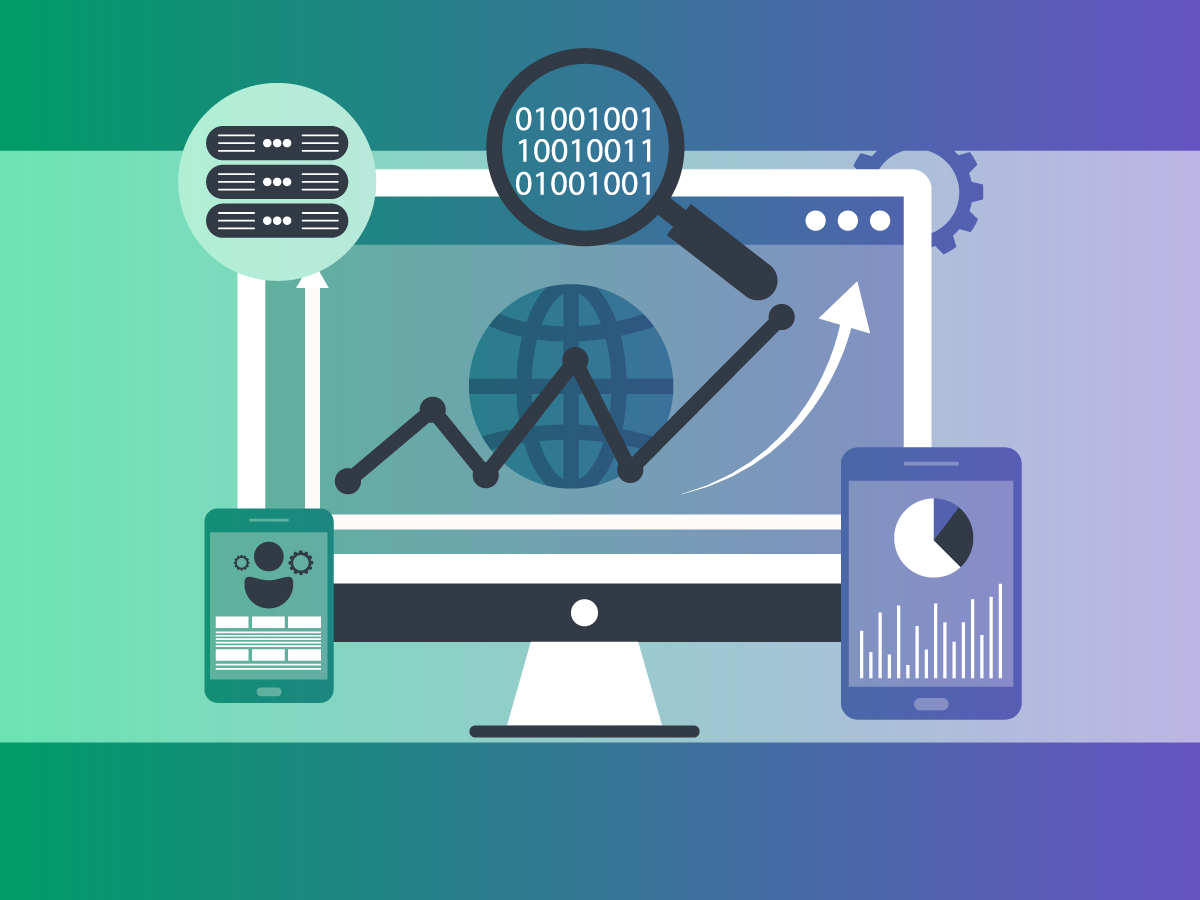
The platforms that move on these first will not just win clients. They will define the category.
1. Own the "Last Mile" of AI with Decision-Layer Automation
When Automation Stops Short
Today, most expense management platforms use AI, but if we were to analyse where exactly that AI is making decisions, the answer would almost always mention the same things: receipt OCR, merchant categorization, duplicate detection, and anomaly flagging.
All of that is real and valuable, however its very much expected. What still hasn't been solved is what happens after the flag gets raised, the category gets tagged, and the potential policy exception gets identified.
Even if we talk about the biggest platforms, there has to be a human who will work on the problem. A manager opens a queue, reads the context they have to reconstruct themselves, makes a judgment call, and clicks approve or reject.
In 2025, leading expense management systems can automatically approve around 85% of routine expenses that fall within policy guidelines, flagging only exceptions for human review. While that sounds impressive, the remaining 15% requiring human touchpoints is where high costs can accumulate.
What Decision-Layer Automation Actually Looks Like
The distinction worth drawing is between automating the workflow and automating the decision. Workflow automation moves an expense management system report from the inbox to the queue to notification.

Decision-layer automation determines what happens to it without putting it in anyone's queue in the first place.
In practice, this can look like several things:
• Self-resolving policy exceptions. An expense that's $15 over the per-meal limit gets auto-approved and logged with a full audit trail, because the employee has zero policy violations in the past 18 months and the variance falls within a pre-configured tolerance. No manager involvement. No queue entry. Full documentation.
• Confidence-score-based routing. High-confidence transactions get processed automatically. Low-confidence transactions get flagged to a manager, but arrive pre-populated with the system's reasoning: "Flagged because merchant category is ambiguous and amount is 23% above category average. Suggested action: approve with reclassification." The manager is making a faster, better-informed decision, not starting from scratch.
• AI-generated audit trails. Not just a log of what happened, but a plain-language explanation of why the system decided what it decided. This matters increasingly as audit and compliance requirements tighten, and as finance teams need to demonstrate to auditors that automated decisions are defensible, not just convenient.
Why 2026 Is the Right Window
The infrastructure to do this reliably has been available for a few years. What's changed is that LLM-based reasoning has matured to the point where contextual, policy-aware decisions can be made consistently, not just in demo conditions.
Finance teams are stretched in ways that make eliminating the approval queue a genuine operational priority rather than a theoretical efficiency gain. And the compliance environment is pushing in the same direction: explainability requirements mean that "the AI flagged it" is no longer a sufficient audit response, which is actually good news for platforms that invest in transparent decision logic.
The implementation path doesn't require rebuilding the platform. It requires identifying where the handoff from automated to human currently happens, and systematically working backward from those points.
Softjourn's work on automated expense approval workflows demonstrates exactly this kind of layered approach: building autobots that route, approve, return, and assign reports based on configurable policy rules, without removing visibility or control from the finance team. The key design principle was that automation should reduce decision load, not create a black box.
Where to start: Pull a 90-day sample of approved expenses and identify what percentage requires human review. Segment by reason: ambiguous category, policy exception, over-limit, or missing documentation. Each segment is a specific automation target with a defined success metric. That's your roadmap for the decision layer.
2. Become the Financial Intelligence Layer, Not Just a Reporting Tool
From Dashboards to Decisions
Finance teams have more dashboards available to them today than at any point in the history of corporate software, like spend by category, spend by department, spend by employee, and month-over-month comparisons with a color-coded variance column.
Most expense platforms can generate all of this. Most finance teams look at these reports, note what has already happened, and move on. That's not intelligence, it's a well-formatted record of the past.

The gap between what platforms currently offer and what finance leadership actually needs is no longer a reporting gap. It's a timing gap. CFOs and finance directors aren't asking for a better view of last month. They want to know what's about to happen before it does, and what they should do about it. We have worked with leading expense management companies to upgrade their systems and Elasticsearch, so they could cross this line from recording spend to anticipating it, and turn a compliance tool into something much harder to replace.
Reporting Tool vs. Financial Intelligence
The difference between a reporting tool and a financial intelligence layer isn't the technology stack; it's the question being answered. Reporting answers: what happened? Intelligence answers: What should we do next?
A few concrete examples of what this looks like when built well:
• Vendor performance scoring. Rather than showing a raw line item for a vendor category, the platform surfaces patterns: this vendor's invoices have come in an average of 11% above the initial estimate over the past six quarters. That's information a procurement team can act on before renewing a contract, not after.
• Budget velocity alerts. If a department is spending at a rate that puts them on track to exhaust their quarterly budget three weeks early, the system flags it when there's still time to adjust, not on the day they hit the ceiling. The alert includes context: which cost centers are driving the acceleration, and which are running under.
• Spend scenario modeling. Before a leadership team approves a new headcount plan, a contractor engagement, or a marketing push, they can run a "what-if" against current budget positions. Not in Excel. Not in a separate FP&A tool. Inside the platform that already holds the transaction data.
None of this requires inventing new data. The transaction history is already there. What it requires is infrastructure built to query that data forward, not just backward.
The Infrastructure That Makes It Possible
Getting from stored transactions to actionable intelligence isn't a product design problem; it's an architecture problem. The platforms that have struggled to move in this direction usually share the same constraint: their data is stored for compliance and retrieval, not for analysis.
A few infrastructure investments that change this:
• Structured data warehousing that organizes transaction history by the dimensions finance teams actually query: vendor, category, cost center, policy type, and approval pathway.
• Fast search across large datasets. Elasticsearch, for example, allows near-instant querying across years of transaction data without the latency that makes interactive analytics frustrating to use.
• Embedded analytics layers like Power BI that surface insights directly inside the platform, rather than requiring users to export data and rebuild reports in a separate tool.
The moment a finance team has to leave the platform to get the insight they need, the platform has already lost ground to whatever tool they go to instead.
Softjourn's work with PEX illustrates what this progression can look like in practice. The engagement started with building a data warehouse capable of analyzing a decade of transaction data, then moved to a Power BI implementation that let PEX team members self-service their own reporting without involving engineering.
The result was a customer-facing Spend Analytics app giving PEX's small and mid-size business clients access to the kind of analytics capability that had previously only been viable for enterprises. That's not a reporting feature, but a product differentiator.

Why the Window Is Now
For the past two years, AI-driven insight has become a standard expectation in adjacent software categories: sales platforms surface pipeline risk scores, HR tools predict attrition, and ops platforms flag supply chain exposure before it materializes. Finance leadership has watched all of this happen in tools that sit next to expense management on their tech stack.
The expectation has transferred. Platforms that are still leading with static dashboards are already being measured against a standard they didn't set. The ones that build the intelligence layer now will be positioned as the obvious choice when budget holders evaluate their stack and the difficult-to-displace option for those who've already committed.
Where to start: Audit what questions your finance users are currently answering outside your platform. If they're exporting to Excel or building their own reports in a BI tool, those are your product gaps. The data to answer those questions almost certainly already lives in your system.
3. Win the SMB Market with Embedded, Card-Linked Spend Controls
Policy at the Point of Swipe
Picture the typical small business expense workflow: an employee makes a purchase, submits a receipt, waits for approval, and waits for reimbursement. A finance manager reviews a stack of reports, flags a few that look off, follows up on missing documentation, and eventually closes the month. Everyone involved finds it tedious. Nobody thinks it's working particularly well.
The larger expense management platforms have spent years optimizing this workflow for enterprise customers with dedicated finance teams, complex approval hierarchies, and the patience for multi-week implementation cycles. That's a defensible market, but it's also a saturated one.
Small and mid-size businesses aren't looking for a scaled-down version of enterprise software. They're looking for something that fits how they actually operate: lean teams, fast decisions, and no appetite for a reimbursement cycle that takes longer than the expense itself.
The opportunity is to skip the post-spend review workflow entirely and move policy enforcement to the moment the card is swiped.
What Card-Linked Spend Control Actually Means
The distinction here is worth being precise about, because "expense management" and "card-linked spend control" can sound like the same thing in a product description but are fundamentally different in practice.

Traditional expense management works backward from a transaction that has already happened. Card-linked spend control works forward: the policy is checked before the transaction completes, and either approves or declines it in real time.
• Category-level controls at the card level. A field technician's card is configured to approve gas stations, hardware stores, and tool suppliers and decline everywhere else. No receipt review needed because non-compliant spending can't occur in the first place.
• Virtual cards with built-in constraints. A project-specific virtual card is issued with a set budget, valid for 30 days, restricted to a single vendor category. When the project closes, the card expires. No reconciliation required beyond confirming the card activity matched the project scope.
• Real-time decline with immediate context. When a card is declined, the employee receives a push notification explaining exactly why, with a one-tap option to request an exception. The manager gets the request with the transaction context already pre-filled. The whole exchange takes under two minutes rather than becoming a support ticket that surfaces two weeks later at the month-end close.
This isn't a futuristic capability. It's available today. The gap isn't the technology; it's that most expense platforms weren't built around card infrastructure and haven't made the integration investment to get there.
Why SMBs Are the Right Target
Enterprise expense management has a well-established competitive landscape with entrenched vendors, long procurement cycles, and high switching costs. The SMB segment doesn't have the same dynamics. Switching costs are lower, procurement decisions are faster, and the person evaluating the platform is often also the person who will use it every day.
More importantly, the expectation bar has changed. SMB owners and their employees have been using consumer fintech products for years, with apps where spending controls, instant notifications, and real-time balance updates are standard.
The tolerance for a corporate expense tool that requires a three-step submission process and a five-day reimbursement window is shrinking, particularly with younger finance and operations staff who've never had to accept that as normal.
Where the Integration Work Actually Sits
The card infrastructure itself doesn't need to be built from scratch. BaaS (Banking-as-a-Service) providers and card network partnerships have made the underlying payment rails accessible to software platforms that aren't banks. What requires investment is the integration layer: connecting card transaction data to policy rules in real time, managing cardholder data securely, and maintaining PCI compliance as the platform scales.
That last point is not a minor consideration. Handling cardholder data at any level of the transaction flow brings PCI DSS obligations. Platforms that skip the compliance rigor to move faster typically discover, at the worst possible time, that the shortcuts created exposure they weren't prepared to manage.
Softjourn's work in this space spans both sides of that equation. On the product side, the team has built card management platforms supporting physical and virtual card issuance, rule-based spend controls with per-card or per-group category restrictions, bulk card creation, and dynamic transaction limits.
On the security side, that work has been conducted alongside ongoing PCI compliance programs, including vulnerability management, SIEM deployment, and Zero Trust Network Access implementations that keep the cardholder data environment audit-ready as the platform grows.
Where to start: Map your current product against the card lifecycle: issuance, controls, transaction authorization, reporting, and reconciliation. Identify which of those stages your platform currently touches and which still depend on a third-party card provider with no API surface for real-time policy enforcement. That gap is your integration roadmap.
4. Build for Multiple Stakeholders, Not Just the Finance Team
One Platform, Multiple Audiences

Most expense management platforms were designed with a single buyer in mind: the CFO, the Controller, or whoever holds the budget for finance software. That made sense when purchasing decisions lived entirely within the finance function. It makes less sense now.
IT signs off on the security and compliance posture before any SaaS tool gets provisioned. HR has started weighing in on employee experience as part of broader workforce satisfaction initiatives. And employees themselves, the people submitting expenses daily, have become an informal veto power: tools with poor UX get abandoned, worked around, or generate enough internal complaints that renewal conversations get complicated.
The platforms still optimizing for a single buyer are winning deals, but they're struggling to keep them. The ones gaining ground are the ones that treat finance, IT, HR, and employees as distinct audiences with legitimate, non-negotiable requirements and build product architecture that serves all of them without asking any group to compromise.
What Each Stakeholder Actually Needs
The gap between what most platforms offer and what each stakeholder group requires is worth being specific about, because "we serve your whole organization" is a marketing claim most platforms make and few deliver on.
• Finance needs real-time spend visibility, policy enforcement that doesn't require manual oversight, an audit trail that holds up under scrutiny, and budget versus actual reporting that doesn't require a BI analyst to generate. Most platforms do reasonably well here, this is their home territory.
• IT needs single sign-on, granular role-based access controls, data residency options that satisfy regional compliance requirements, and API access clean enough to support integrations with the broader tech stack. IT also needs to be able to onboard and offboard users without submitting a request to the finance team. This is where many platforms fall short: security and access architecture were an afterthought, not a design starting point.
• HR has a different set of concerns entirely. Reimbursement timing affects employee satisfaction scores. Policy fairness across departments and seniority levels is something HR gets asked about. Onboarding and offboarding workflows need to tie into spend permissions automatically, so a departing employee's card isn't still active two weeks after their last day. These aren't capabilities most expense platforms have built for HR; they've built them for finance, and HR has to work around whatever's there.
• Employees have the simplest requirement and the least patience for not having it met: the experience needs to be fast, obvious, and forgiving of mistakes. An expense submission that takes more than 90 seconds, requires navigation through more than two screens, or produces an error message that doesn't explain what went wrong will be tolerated for about three weeks before people start keeping receipts in a drawer and submitting them in batches at month-end. That behavior defeats the purpose of real-time spend visibility for finance, which means the stakeholder problem loops back on itself.
What Modular, Role-Based Architecture Looks Like in Practice
Serving four audiences isn't a UX problem that can be solved by adding a settings panel. It requires architecture decisions and fintech integrations made early enough to actually support differentiated experiences per persona without creating four separate products that are impossible to maintain.
A few markers of platforms that have gotten this right:
• Persona-specific dashboards that aren't just filtered views of the same data, but purpose-built for the questions each role actually asks.
• Granular permission structures where a regional manager can see their team's spend but not company-wide data, and where that boundary is configurable without an engineering ticket.
• Mobile experiences are designed independently from the desktop interface, not adapted from it, because the employee submitting a receipt in a parking lot has different needs than the finance director reviewing monthly close from their desk.
• Integration architecture that lets each persona connect the tools they already use: QuickBooks for finance, Slack for manager approvals, SSO for IT, and calendar integrations for trip-based expense attribution.
Softjourn's work with PEX is an early, practical example of this thinking in action. Rather than building one application that administrators and cardholders both had to navigate, the team built two distinct mobile apps, one purpose-built for administrators managing funds and approvals, one for cardholders checking balances and requesting funds. The separation reduced support call volume significantly because each user group was only ever looking at what was relevant to them.
That same design logic, applied at the platform level and extended across the full stakeholder map, is what separates products people tolerate from products teams actively advocate for during renewal conversations.
Where to start: Run a code audit before the next roadmap planning cycle. Interview users from finance, IT, HR, and a sample of general employees separately, not in the same session, because each group will defer to finance if they're in the room together. Map where friction exists per group. The persona with the most unresolved friction and the least current product investment is your highest-return roadmap priority.
One Layer Deeper
The thread running through all four of these opportunities is the same: the work is moving one layer deeper than where most platforms are currently competing.
Decision-layer automation goes one layer deeper than workflow automation. Predictive financial intelligence goes one layer deeper than reporting. Point-of-transaction spend controls go one layer deeper than post-spend reconciliation. Multi-stakeholder architecture goes one layer deeper than building for a single buyer.

None of these is completely uncharted. Pieces of each exist in the market today. What doesn't yet exist, for most platforms, is all four built deliberately to work together, an expense platform that automates decisions, anticipates spend, prevents non-compliant transactions before they happen, and serves every person who touches the product, not just the person who signed the contract.
The platforms that start making those architecture decisions now will be the ones that look obvious in hindsight by 2027.
If you're evaluating which of these opportunities fits your current platform and roadmap, Softjourn's team has spent over a decade building expense management infrastructure across all four of these areas. Contact us to talk through where to start.