Inside the Smart Stadium: Mobile Ordering, Wayfinding, and IoT for Sports Venues
Learn how mobile ordering, wayfinding, and IoT work inside a sports app, and what it takes to build in-venue technology that performs at scale on game day.

Learn how mobile ordering, wayfinding, and IoT work inside a sports app, and what it takes to build in-venue technology that performs at scale on game day.
If an average sports fan leaves their seat in the 73rd minute because they want a beer, maybe a hot dog, by the time they return, they would have missed two goals and a red card.
That experience is not just frustrating. For venues, it represents revenue that never materialized, a fan whose satisfaction score just dropped, and a missed opportunity to capture data that could have made the next visit smoother.
In-venue technology, specifically mobile ordering, wayfinding, and IoT-enabled infrastructure, exists to solve exactly this kind of problem. And for sports organizations considering sports app development in 2026, these features are no longer optional on a feature checklist. They are what separates a genuinely useful in-venue experience from one that sends fans back to their couch next time.
The App Is Now the Venue Interface
When fans arrive at a stadium today, a growing number reach for their sports app before they do anything else. Their digital ticket is there. Parking and entry information is there. In the best-designed cases, their food order is placed before they find their seat.
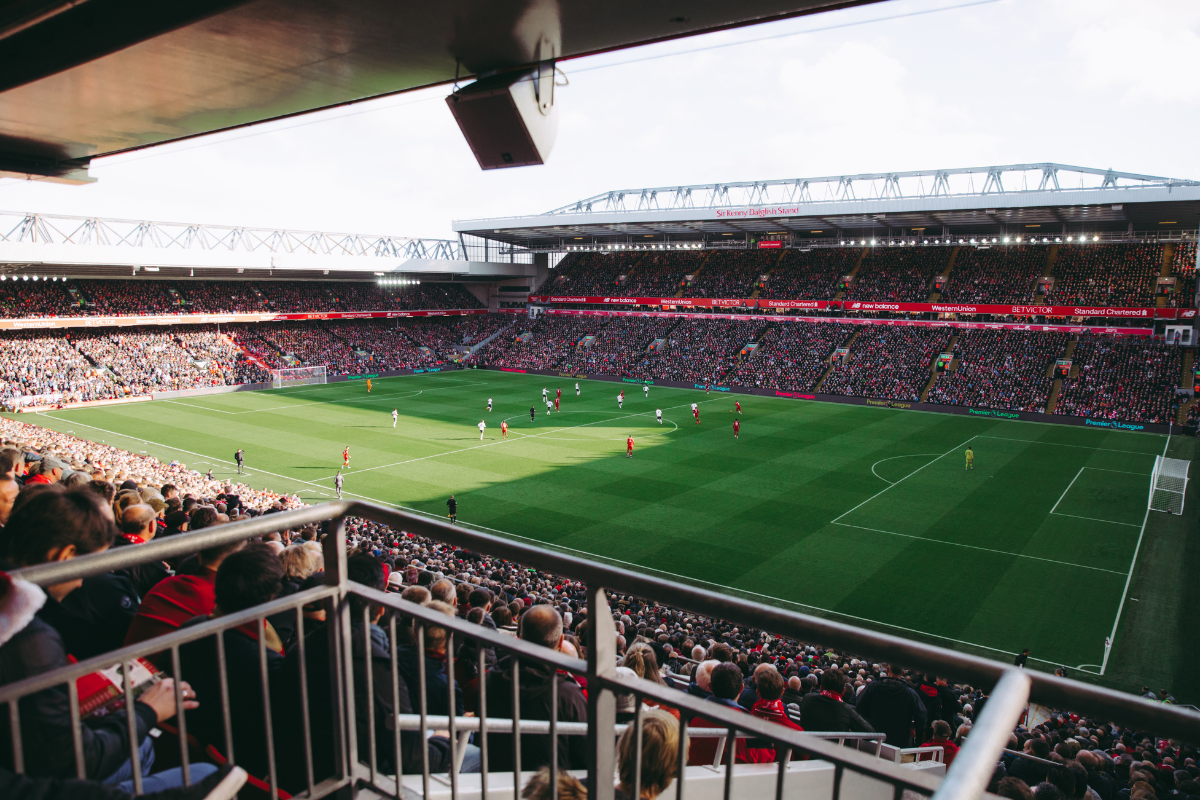
The in-venue reserved seating app has become the primary interface between an organization and its fans during a live event. This matters because it changes what sports app development actually requires. An app covering scores and news does one thing reasonably well. An app designed to serve someone physically inside a 70,000-seat venue handles something completely different. Connectivity, real-time updates, location awareness, and transactional capabilities must all work reliably at scale, exactly when fans need them most.
For organizations evaluating their in-venue technology stack, this article focuses on the three components that matter most: mobile ordering, wayfinding, and IoT infrastructure, and what it takes to build them properly on both Android and iOS platforms.
Mobile Ordering: The Feature That Pays for Itself
In-seat mobile ordering may be the easiest in-venue feature to justify from a business standpoint. Fans who can order from their seats order more, leave their seats less, and consistently report higher satisfaction with their overall experience.
Appetize (one of the most widely deployed venue tech platforms, used by 63%+ of major league U.S. teams) reported an average 22% increase in order size for mobile orders versus traditional point-of-sale orders. The challenge is not convincing leadership that it is a good idea. It is building it in a way that actually holds up under game conditions.Our teams have worked with Tacit to create a great ordering experience for their customers.

What That Looks Like in Practice
A functional in-seat ordering system inside a sports app involves more than a menu and a checkout screen. It requires each of the following to work together:
- Seat identification: Seat identification that works reliably, whether through QR codes, geofencing, or manual input from a preloaded seating map
- Order routing: Order routing that directs requests to the right concession stand or kitchen based on the fan's location in the venue
- Real-time status updates: so fans know whether their order is being prepared, is on its way, or is delayed.
- Payment processing: Payment processing that is fast, secure, and does not require re-entering card information on repeat orders
- Runner and staff coordination tools: Runner and staff coordination tools
that allow venue operations to actually fulfill delivery promises during high-volume windows.
Without all of these working in tandem, mobile ordering becomes a source of frustration. Fans who place an order and receive no update, or who find their food delivered three sections over, are unlikely to order again. They are also more likely to mention it.
Wayfinding: The Feature Nobody Asks About Until They Need It
Wayfinding does not get much attention in strategy meetings. It is not the feature that goes into a product announcement or generates a headline about fan experience innovation. But ask any fan who has spent ten minutes searching for the right gate, the accessible restroom, or the section they booked three months ago, and they will tell you it matters more than almost anything else in the app.
For large venues, wayfinding built into an in-venue sports app is a practical quality-of-life improvement for fans and a legitimate operational tool for venue staff.

Indoor Mapping and Navigation
Outdoor navigation is a solved problem. GPS and Google Maps handle it reliably. Once a fan walks through the gates, that changes. Indoor positioning requires a different technical approach.
Modern sports apps draw on a combination of methods to enable in-venue navigation:
- Bluetooth Low Energy (BLE) beacons are placed throughout the venue to provide approximate location data as fans move through concourses
- Wi-Fi positioning that uses signal strength from access points to triangulate position within a zone
- Visual landmark mapping that displays location relative to known physical reference points, such as gates, sections, and concession stands
- QR code anchors at key locations that fans can scan to confirm or reset their position within the app
None of these methods matches the precision of outdoor GPS, and a well-designed in-venue wayfinding system acknowledges that honestly. The priority is clarity over precision: clear directions to the right concourse, using landmarks people can actually see, presented in a way that does not require the fan to understand how any of the technology works.
What Wayfinding Data Reveals
The most obvious benefit of having a developed sports app is a significantly improved fan experience. A fan who finds their seat quickly, locates the nearest concession stand without getting turned around, and finds their exit at the end of the night has had a measurably better time.
Less obvious: the movement data collected through in-venue wayfinding is genuinely useful for operations. Understanding where fans cluster, which routes are most frequently taken, and where bottlenecks form gives venue teams actionable information for adjusting staffing, signage, and concession placement from one event to the next.
Datahove's Veko sports event app, which Softjourn helped update and maintain, included maps and geolocation as a primary feature, keeping navigation available to fans even when connectivity was limited. The app was architected to store map data offline so that a loss of signal at a critical moment did not take the whole experience down with it.
IoT in Sports Venues: What Is Actually Deployed
Descriptions of smart stadium technology in marketing materials tend toward the sweeping: connected experiences, real-time everything, the venue of the future. The practical reality in 2026 is more specific and, in most cases, more grounded. Here is what IoT infrastructure at major sports venues actually looks like on the ground.
Connected Access Control
Turnstiles and entry gates now communicate with central systems in real time. Rather than checking a list of valid barcodes locally on a device, modern access control systems validate tickets against live databases, flag duplicated or invalid tickets as they are scanned, and push entry data back to operations dashboards immediately.
For a venue processing tens of thousands of fans within a tight pre-event window, the speed of valid ticket processing and the speed of flagging invalid ones directly affect queue length and gate staffing requirements.
Environmental Sensors
Smart venues use sensors to monitor temperature, humidity, air quality, and zone-by-zone occupancy. This might sound like a facility management detail, but it has direct consequences for fan experience. A section that is noticeably hotter than the rest of the stadium, or an area with poor air circulation, can be flagged before fans start complaining, allowing staff to respond before the problem compounds.
For premium areas and club spaces where the experience standard is held to a higher bar, environmental monitoring is a straightforward way to ensure consistency across events.
Crowd Flow and Occupancy Monitoring
Sensor arrays and camera systems can provide venue operators with real-time crowd density data across the entire building. That information feeds decisions about:
- Directing staff to concourses where queues are forming faster than expected
- Identifying areas approaching uncomfortable density levels before they become safety concerns
- Adjusting which concession stands open or close based on demand patterns in specific zones
- Planning post-event exit sequencing to reduce bottlenecks at key chokepoints
Smart Concessions and Inventory
IoT-connected concession systems track inventory levels in real time, sending alerts when items run low and automatically updating in-app menus to remove out-of-stock items. A fan who ordered through the sports app should not arrive at their delivery point to be told the item they ordered is unavailable.
Over multiple events, real-time inventory data also improves procurement accuracy and reduces food waste, which matters at the operating margin level for concession operators.
Building for Both Platforms: Android and iOS
For any organization building an in-venue sports app, the question of sports app development for Android and iOS is not just about feature parity. It is a decision that shapes architecture choices, release timelines, and the quality of the fan experience on each platform.

The two platforms handle certain in-venue capabilities differently, and those differences matter most for exactly the features this article covers: The difference that matters most for in-venue features is background location. iOS places tighter restrictions on when apps can access location data while running in the background. A wayfinding feature that depends on continuous location updates needs to be designed with this constraint in mind, particularly for fans who have not explicitly granted location permissions.
For sports app software development teams working across both platforms, the most reliable approach is to build the shared logic in a cross-platform layer (React Native or Flutter are common choices) while handling platform-specific APIs natively. Forcing a single code path for BLE communication or location services on both iOS and Android simultaneously tends to produce substandard results on each.
What Gets Missed When Organizations Build In-Venue Technology
The most common failure mode in in-venue technology projects is not technical; it's is a planning problem. Organizations consistently underestimate the gap between how the app performs in testing and how it performs at full capacity during a real event. A mobile ordering system that works cleanly with 50 concurrent users in QA may behave very differently when 8,000 fans attempt to order within a 20-minute halftime window.

A few areas that deserve more deliberate attention during the planning phase:
Network infrastructure: Mobile ordering, wayfinding, and IoT sensors all depend on reliable in-venue connectivity. Many older stadiums have notoriously poor Wi-Fi coverage, particularly in corners, lower bowl areas, and standing sections. Before committing to in-venue app features, a network capacity audit is worth doing. Features that fail because of poor connectivity reflect on the app regardless of where the responsibility actually sits.
Staff and operational readiness: An in-venue app that routes orders to concession staff requires those staff members to be trained, equipped with appropriate devices, and genuinely ready to fulfill orders within the promised window. Technology that the operations team cannot execute in real conditions does not solve the problem.
Offline fallback behavior: Connectivity inside large venues is uneven. A fan sitting in a section with a weak signal should still be able to access their ticket, see basic venue information, and understand what the app is doing. Designing for offline-first, or at minimum, graceful degradation, is non-negotiable for in-venue sports apps.
Testing at realistic game-day load: Testing that simulates actual game-day traffic patterns, including the surge at gates before kickoff and the spike at halftime, is a requirement that is removed from project timelines more often than it should be.
Putting It Together
Getting mobile ordering, wayfinding, and IoT to work well inside a sports app is not a matter of adding features to an existing product. It requires the right architecture from the start and an honest assessment of the infrastructure that the venue can actually support.
The organizations that get this right tend to approach in-venue technology the same way they approach any high-stakes operational system: with a clear-eyed view of what has to work under pressure, what happens when it does not, and how to build for both.
For sports app development teams, that means designing for peak load rather than average load, using platform-native implementations for location and BLE on iOS and Android rather than lowest-common-denominator solutions, treating venue network infrastructure as part of the product scope, and planning testing cycles that include realistic game-day simulations.
Whether you are building a new in-venue sports app from scratch or extending an existing one with mobile ordering, wayfinding, or IoT-connected features, contact Softjourn to start scoping your sports app software development project.